29.09.2026 - 09:18
A new laser, press brake, or robotic cell can instantly improve an individual operation. However, if material is still waiting for a forklift, programs are prepared manually, and finished parts pile up between processes — the plant has merely created an "island of automation." Understanding how to integrate manufacturing automation means connecting equipment, material flows, data, and people around a clearly defined production goal.
For sheet metal manufacturers, the right project is rarely the one with the most robotics or the highest equipment specifications. It is the project that removes the bottleneck limiting throughput, maintains product quality and remains supportable for years after commissioning. A phased integration plan makes that outcome far more predictable.
Start with the production bottleneck
Automation should be based on real production data, not on an equipment catalogue. Map the route of a representative group of parts — from incoming sheet metal to packed product. Record setup, cutting, bending, handling, queue and rework times, the level of operator involvement and the distance the material travels.
In many metalworking plants, the bottleneck is not the cutting or bending cycle itself. It may be sheet retrieval from storage, tool changes, program launch, part sorting, handover to the next operation or a shortage of skilled operators on the second shift. Each of these problems requires its own solution.
For example, a laser machine with an automatic loading and unloading system can extend unattended run time. However, it will not shorten overall order lead times if parts are then sorted by hand for hours before bending. In that case, nesting discipline, part marking, buffer zone management and bending department capacity deserve just as much attention.
Define the business goal before choosing the technology. It may be increasing lights-out production, shortening lead times, reducing work in progress, lowering handling costs, improving repeatability or adding capacity without expanding floor space. A clear goal lets you compare alternatives and calculate payback on more than machine utilisation alone.
How to integrate automation around material flow
Material flow is the physical backbone of an automated factory. Sheet metal processing involves heavy, varied and often low-volume material. If material handling is disconnected from machine operation, the benefits of automation are quickly lost to downtime and unnecessary loading and unloading.
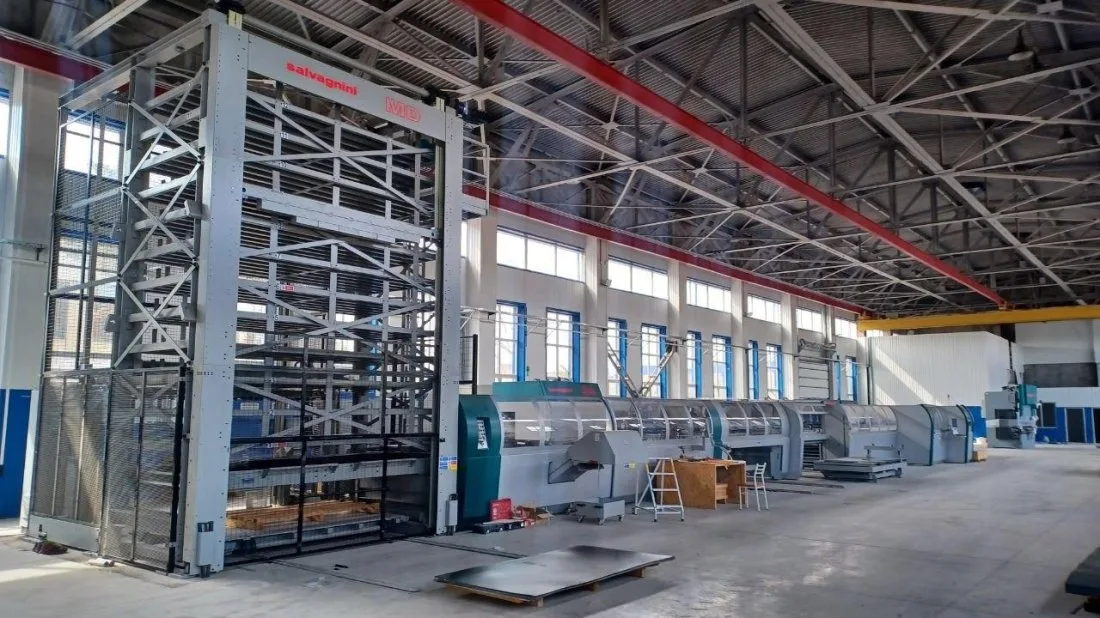
Start by defining how raw material enters storage, how it is identified and how it reaches each operation. A vertical automated storage system saves floor space and provides transparent visibility of available sheet stock. Connected loading systems can feed material to laser cutting systems, punching machines or combination machines according to the shift plan. The goal is not simply automatic movement but a reliable, traceable flow that delivers the right material just in time.
The same planning is needed after cutting. Assess whether parts require automatic stacking, sorting, palletising, buffering or direct transfer to bending. Small parts, skeleton remnants, protective films, mixed materials and frequent job changes — all of these affect the handling concept. A highly automated transport system makes sense for stable high-volume production, whereas a flexible buffer and a well-organised manual handling point can be the better investment for a high-mix product range.
Shop floor layout matters as much as machine capability. Shorten frequently used routes, maintain safe access for maintenance and allow space for pallets, scrap and exceptions. A layout that looks efficient on paper can fail in practice if operators cannot change tools, check quality or clear a fault without stopping neighbouring equipment.
Connect machines, software and data
Physical integration alone does not create a coherent production system. The software layer must connect quoting, orders, programming, nesting, scheduling, inventory, machine status and quality data at a level that matches the plant’s needs.
For many fabrication plants, the first priority is end-to-end programming and nesting optimisation. A single software environment reduces duplicated engineering work, standardises processing parameters and improves material utilisation. It also gives planners visibility of sheet stock, production orders, machine load and due dates.
Machine integration provides real feedback from the shop floor. Status data shows whether a machine is running, waiting for material, stopped by a fault or in setup. This distinction is essential: a dashboard showing high utilisation is of little use if the plant still delivers late because jobs are released in the wrong sequence.
Avoid buying software features without understanding which decisions they will improve. Ask practical questions: who adjusts the schedule when priorities change? Who owns material master data? How do verified, version-controlled programs reach the machine? Which alarms require action from the operator, maintenance or the supplier’s technical support? Clear ownership prevents the problem of accumulating valuable data that nobody uses.
Integration with existing ERP or MES systems should be planned early. It does not always require a large custom project. In some cases, a controlled exchange of orders, routings, material requirements and completion data is enough. The depth of integration depends on order volume, part complexity, planning discipline and the systems already in place.
Match automation to the product mix
A configuration that is most productive for series parts may prove too rigid for small batches and frequent design changes. Automation should match part families, batch sizes, material range, quality requirements and production growth plans.
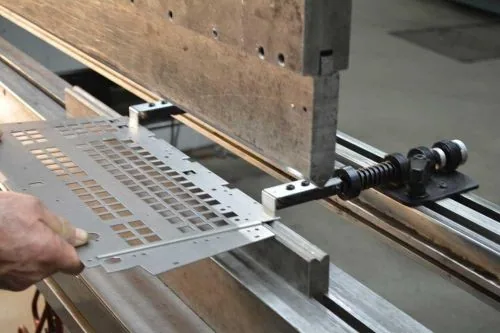
A robotic press brake cell delivers high repeatability and reduces dependence on manual labour for suitable parts. However, it requires parts designed or selected for stable robotic gripping and predictable process behaviour. Complex parts with frequent changeovers may remain more efficient on a flexible manual or semi-automatic press brake. The decision should be based on real production data, not on theoretical cycle times.
The same principle applies to automatic panel bending, punching, laser cutting, deburring and finishing. Evaluate parts by size, thickness, material, geometric complexity, need for flipping, tolerances and annual volume. Then determine the percentage of the product range that can be processed automatically without causing constant disruptions.
High-end equipment is most valuable when its potential is supported by the surrounding infrastructure. A fast fiber laser needs an uninterrupted material supply and sufficient downstream capacity. An automatic bending line needs accurate blanks and disciplined program management. A vertical storage system needs reliable inventory records. Integration is a chain, and its weakest link determines its actual performance.
Commission in phases and protect ongoing production
A factory automation project should be treated as an upgrade of the production process, not simply as equipment installation. The best approach is usually phased: process development, part family validation, operator training, stabilisation of data exchange and only then the move to unattended or fully integrated operation.
Before installation begins, define acceptance criteria that reflect the expected business outcome. These may include throughput for selected part families, first-pass quality, setup time reduction, material traceability, uptime targets, safety and the procedure for handling stoppages. Agree on how each metric will be verified.
Prepare utilities, foundations, network connections, safety zones, material staging areas and lifting plans before the equipment arrives. Delays more often occur at these interfaces than because of the machine itself. During ramp-up, keep a proven fallback process for critical orders until the new cell reaches stable output.
Training should go beyond machine operation. Operators need to understand loading rules, fault recovery procedures, quality control methods, program selection and escalation procedures. Maintenance staff need maintenance schedules, a spare parts plan, diagnostic access and technical support contacts. Managers need to learn to interpret production data correctly without using it as a formal tool for putting pressure on operators.
At Italian Machinery Association, integration support goes far beyond equipment supply, because installation, training, service and maintenance determine whether a new system reaches its planned capacity in daily operation.
Evaluate results after a month of operation
Do not judge automation by acceptance tests alone. The first weeks reveal real deviations in material supply, order release, operator confidence, maintenance needs and product mix. Track results against the original bottleneck and compare the period of stable operation with the baseline.
Useful metrics include output per shift, order lead time, queue time, equipment availability, material utilisation, first-pass yield, number of manual touches per part and freed-up labour hours redirected from manual routine to higher value-added tasks. Analyse variation as carefully as averages. A cell that runs efficiently on 80% of orders still needs work if the remaining 20% cause daily disruptions.
Use the data to identify the next improvement step. It may be a software logic adjustment, connecting the storage system, additional tooling, nesting optimisation, a new quality control station or automation of an adjacent process. Production automation becomes economically justified when each stage improves the next process handover rather than simply adding isolated technology.
The practical goal is a factory where equipment, materials and information move with minimal delays and without hasty decisions made in crisis mode. Build this system step by step, removing one verified bottleneck after another, and automation will remain a controlled investment rather than an expensive problem.